
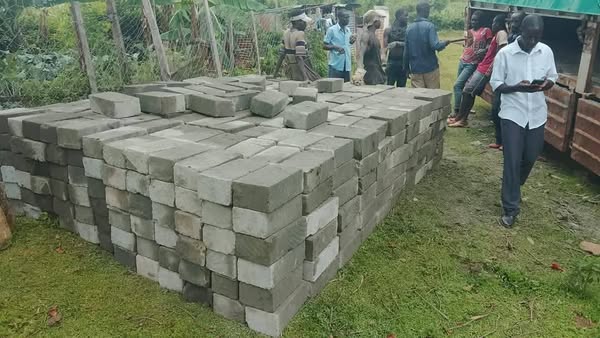
Ndarugo 6×9 vs 9×9 stones: Which Stone Size is Best?
Ndarugo 6×9 vs 9×9 Stones in Kenya
When it comes to construction and masonry in Kenya, particularly in regions like Nairobi, Kiambu, and Machakos, Ndarugo machine-cut stones are an essential material for quality building projects. Among the most commonly used sizes are the ndarugo 6×9 and 9×9 stones. But how do you decide which size is better for your project?
This article will guide you through the major differences, uses, and considerations, helping you choose the right stone size for your construction needs.
🔹 What Are Ndarugo Machine Cut Stones?
Ndarugo stones are building materials cut from the Ndarugu quarries in Kiambu County. They are known for their uniformity, durability, and affordability, making them ideal for various construction projects. These stones are machine-cut to precise dimensions, ensuring a consistent product that meets construction standards.
🔹 Understanding the Dimensions: 6×9 vs 9×9 Stones
- 6×9 stones: Measure approximately 6 inches in width and 9 inches in height.
- 9×9 stones: Measure 9 inches in both width and height.
Despite their differing dimensions, the length of both stones is essentially the same, so the number of stones per square meter remains consistent for both sizes.
🔹 Application Differences Between 6×9 and 9×9 Stones
6×9 Ndarugo Stones: Ideal for Non-Load Bearing Walls
- Perfect for partition walls, boundary walls, and internal walls that don’t bear heavy weight.
- Their slightly smaller width makes them more economical on mortar usage and space efficiency.
- Commonly used in residential housing developments to separate rooms.
9×9 Ndarugo Stones: Designed for Structural Strength
- Best suited for load-bearing walls, foundations, and multi-storey buildings.
- With a wider width, these stones provide greater structural support for taller and larger buildings.
- Frequently used in commercial buildings, apartment complexes, and foundation works.
🔹 Durability and Strength
9×9 stones are stronger due to their wider cross-section, making them ideal for projects requiring higher load-bearing capacity. They are particularly suited for areas that are prone to seismic activity or heavy rainfall.
On the other hand, 6×9 stones offer reliable strength for non-load-bearing purposes, but may not be as effective in highly stressed structural applications.
🔹 Cost Comparison and Affordability
| Stone Size | Avg Price (KES) | Stones per m² | Mortar Usage |
|---|---|---|---|
| 6×9 | 23–27 | Same per m² | Low |
| 9×9 | 28–33 | Same per m² | High |
- 6×9 stones tend to be slightly cheaper per unit but require less mortar to cover a square meter.
- 9×9 stones are more expensive but may be preferred for their structural strength, especially in load-bearing applications.
🔹 Transportation and Handling
- 6×9 stones are lighter and easier to transport and stack. Their smaller size makes them more manageable for workers.
- 9×9 stones, being bulkier, are heavier and require more robust transport and handling logistics.
🔹 Mortar Usage and Finishing
Both 6×9 and 9×9 stones have the same number per square meter due to their equal length. However, 9×9 stones require more mortar per joint because of their larger width. 6×9 stones fit together more tightly, consuming less mortar and providing a finer finish on interior walls.
🔹 Aesthetic Appeal and Design
Both 6×9 and 9×9 stones offer the same aesthetic appeal due to their smooth finish. Whether used in interior partitions or external walls, both sizes provide a clean, uniform look that can complement any design. The smoothness of the stones ensures that they blend well with plastering and finish projects beautifully.
🔹 Project Type Suitability
| Type of Project | Recommended Stone Size |
|---|---|
| Partition or Interior Walls | 6×9 |
| Foundation and Basement Walls | 9×9 |
| One-Storey House | 9×9 |
| Two-Storey House | 9×9 |
| Perimeter Walls | 6×9 or 9×9 (depends on design) |
| Budget Homes | 6×9 |
🔹 Environmental and Soil Considerations
For sites prone to wet or expansive soils, 9×9 stones offer better stability and resistance to water absorption. They are also preferable for earthquake-resistant structures because of their greater mass and durability.
In areas with more stable soil, 6×9 stones can still be used effectively, especially for non-structural projects.
🔹 Speed of Construction
- 6×9 stones are easier and faster to lay due to their lighter weight and smaller size.
- 9×9 stones may take longer to set due to their larger size but generally require fewer courses (layers), potentially making up for this in fewer joints.
🔹 Final Verdict: Which Stone Size is Best?
The decision between ndarugo 6×9 and 9×9 stones depends on several factors, including the nature of the project, budget, and structural requirements:
- Opt for 6×9 stones if:
- You’re working on non-structural walls or internal partitions.
- You want to reduce costs and mortar use.
- Speed and ease of handling are key priorities.
- Choose 9×9 stones if:
- Your project involves structural walls, foundations, or multi-storey buildings.
- You need greater durability and load-bearing strength.
- The building is in an environment prone to water or seismic activity.
Conclusion
Both 6×9 and 9×9 Ndarugo stones serve vital roles in construction, with the right choice depending on the structural needs, budget constraints, and long-term performance expectations of your project.
To ensure optimal results, always source your stones from reliable suppliers and verify quality before starting your construction.